No products
Product successfully added to your shopping cart
There are 0 items in your cart. There is 1 item in your cart.
INFORMATION
Viewed products
-
Christmas trees
Etching
-
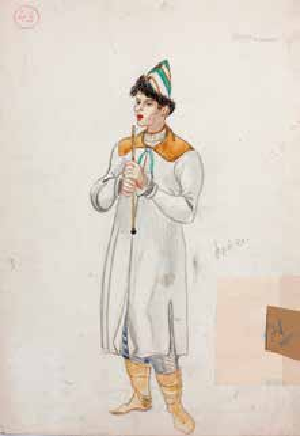
The Tsar's Bride by N....
Theater costume
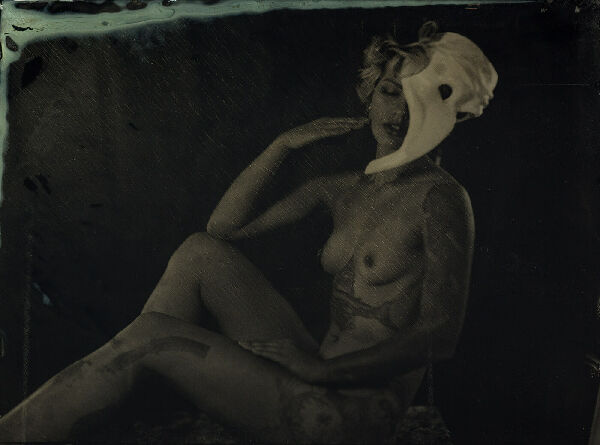
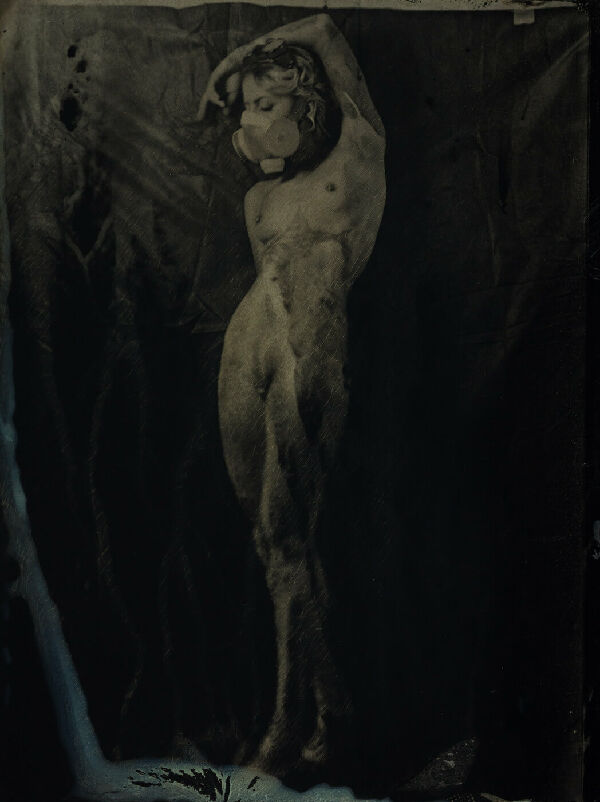
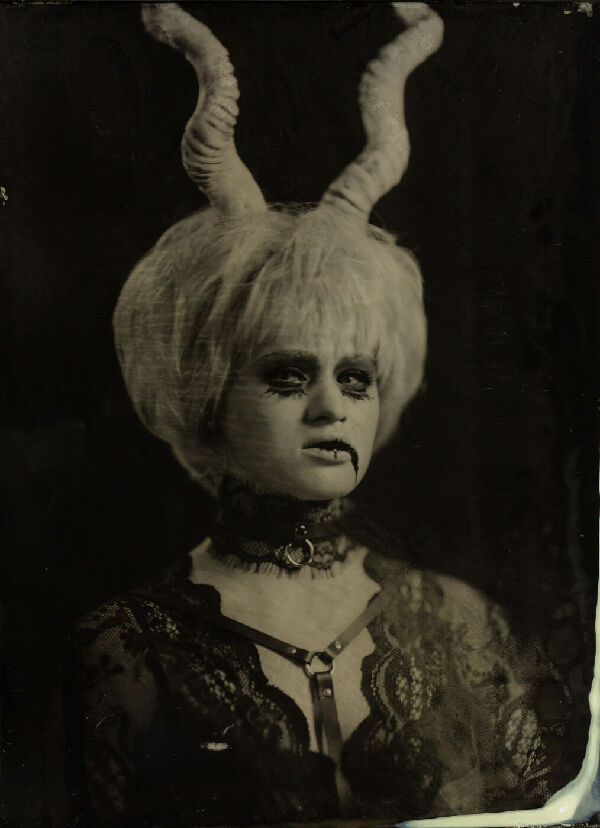
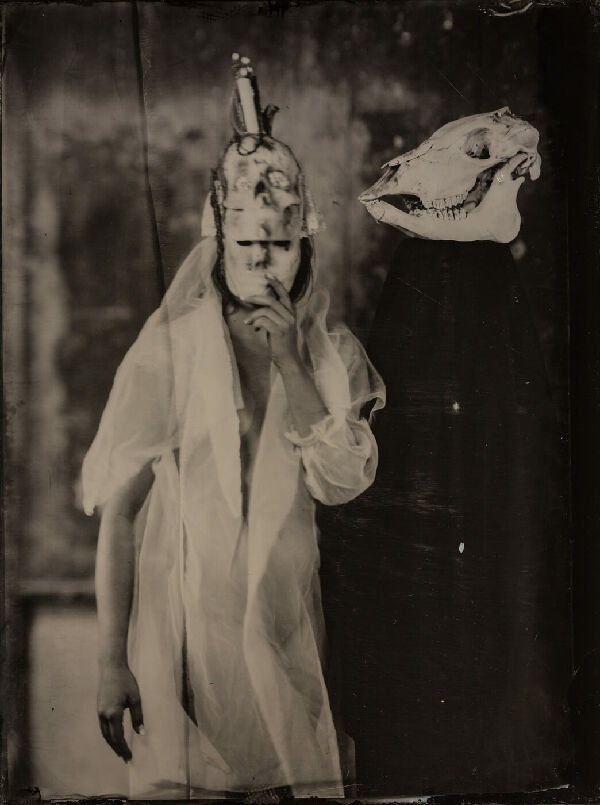
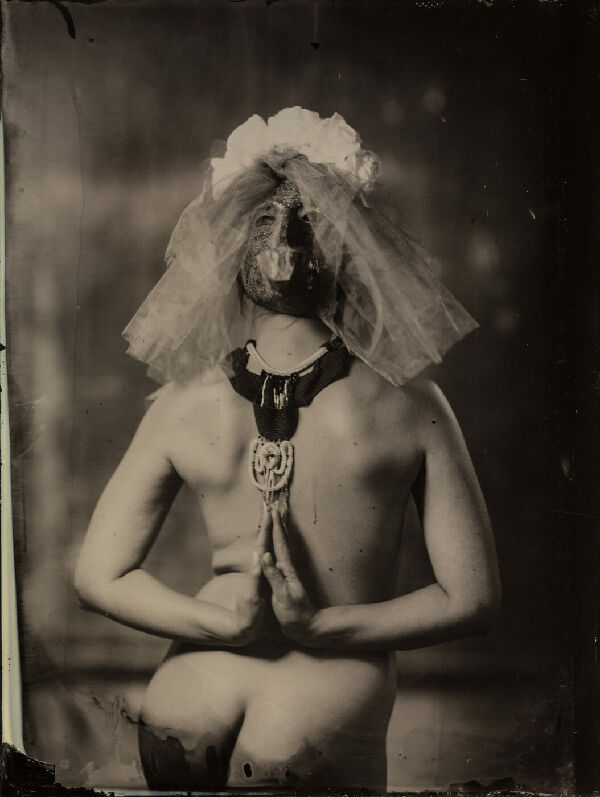
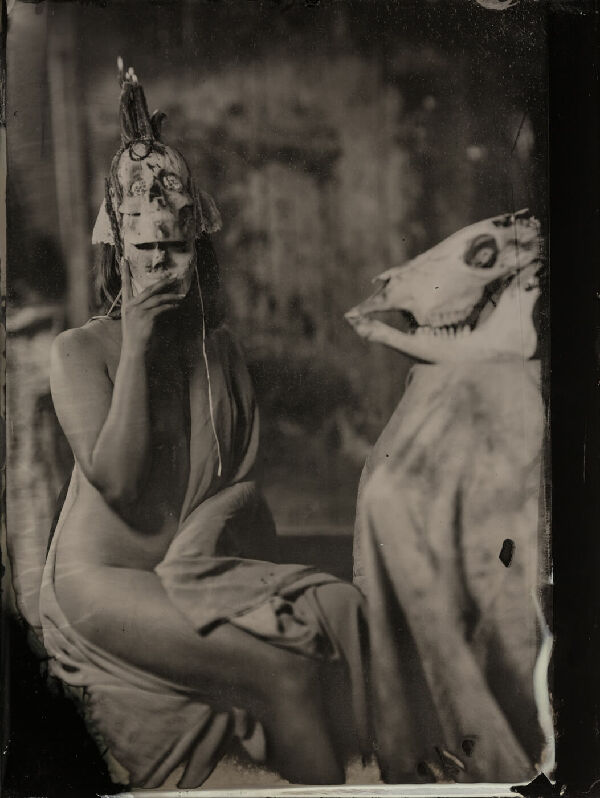
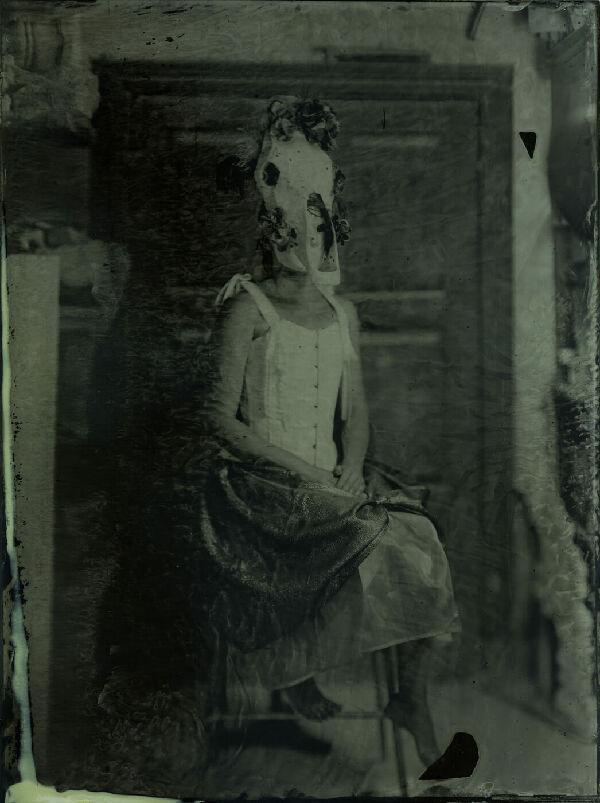
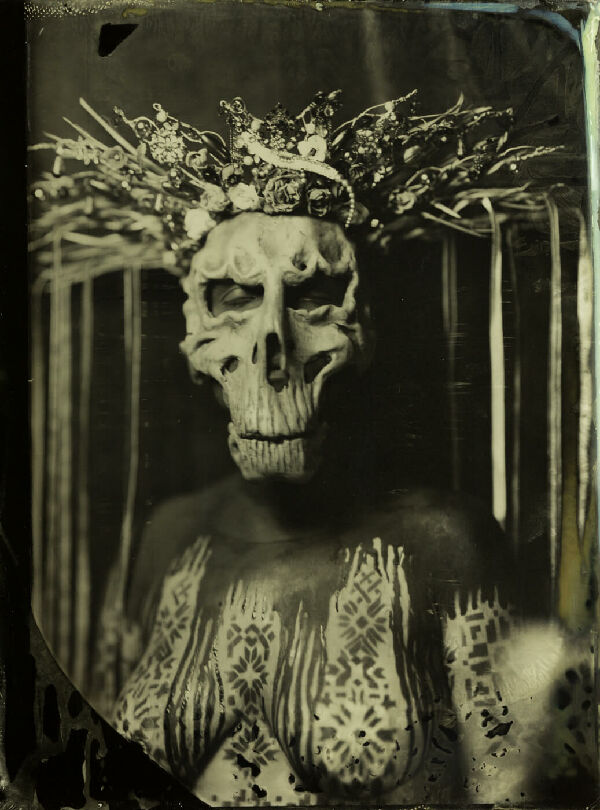
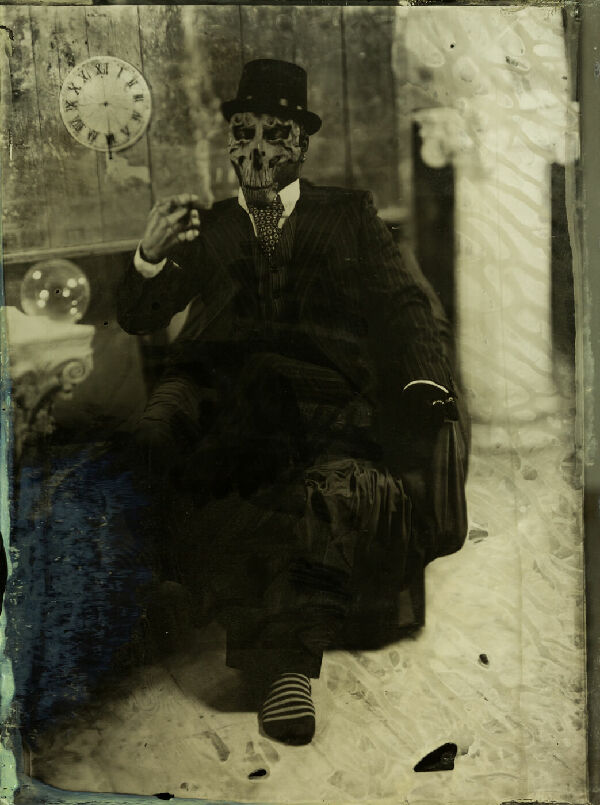
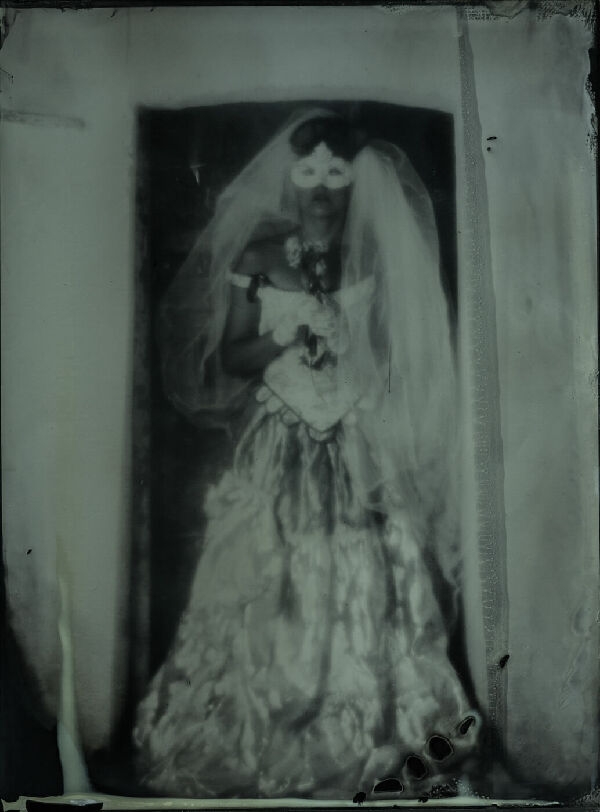
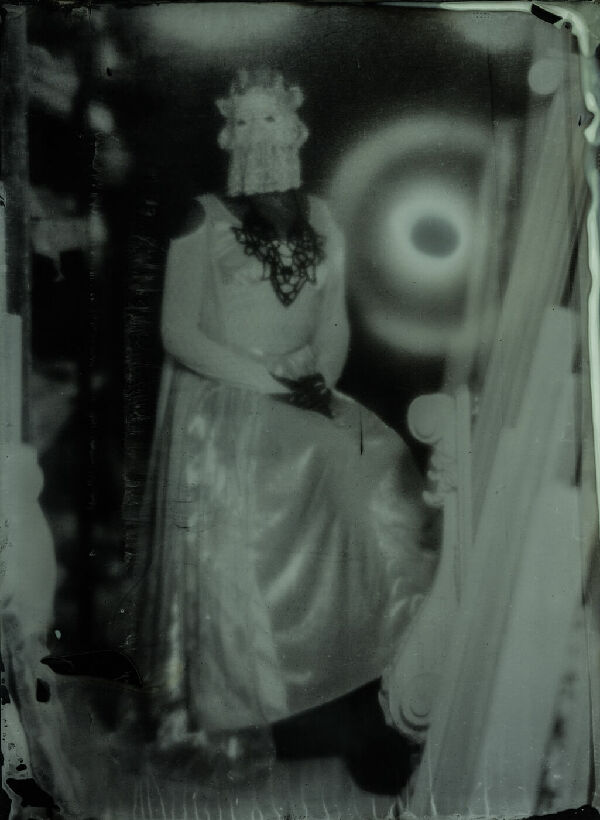
This is a series of ambrotypes in the format of 30x40 cm, made using the technology of the 19th century, on glass.
The year of creation of the collection is 2016-2018.
A mask as a symbol of life. A mask as a symbol of death. A mask to become invisible. A mask to become visible. A mask to pretend to be someone else. A mask to become someone else. A mask can become you. You can become a mask. A mask is a vessel of gods and spirits. A mask is our life.
Masks have been present in visual arts for a very long time, even before it was called visual arts. A mask is not just an object or a symbol, it is a philosophical category, a unique portal through which a person tried to go beyond their personality, beyond the visible world, to the worlds of gods, spirits, and elements. For European art since the Renaissance, a mask is a symbol of lies, deception, and anonymity. It allows you to be where you were not invited and do what does not befit your status. It is like Jupiter kidnapping Europa in the form of a bull, because Jupiter is not allowed to, but a bull is. In other cultures, masks often carry a mystical nature. It is a way to connect with the forces of nature, a way to communicate with spirits and gods, a way to fight human fears and weaknesses.
In his series of ambrotypes, Ukrainian photographer Serhiy Poznansky tells another story about a person and a mask. More precisely, many stories. About dreams and fears, temptation and transformation, and much more. The aesthetics of the ambrotype, devoid of technical "perfection" and many other advantages of modern photography, in this case works in favor of the author. Apparently, this is just the case when a unique photographic technology does not substitute for the artistic value of the image but instead becomes a part of it. The antique effect is an aesthetic message that encourages us to consider the author's statement beyond the current fashion and rapidly changing trends of the digital era.
Works created on glass plates using forgotten techniques do not look modern. It creates an impression that the models posing in front of the huge antique camera, forced to remain still for a sufficiently long time, begin to feel the same way as their distant predecessors from the 19th century. The process of shooting turns into a ritual that allows the camera lens, like the eye of an unknown deity, to scrutinize the souls of those who dared to stand before it. An involuntary transformation takes place, and it becomes a unique journey through time. The heroes of Poznansky take on not only masks, a mandatory attribute of all the images in the series, but also the mannerisms of a completely different era. Thus, each image combines modernity and history, placing them outside of time. Concrete images are replaced by allegories. History becomes eternity.
In Sergey's works, masks carry completely different semantic meanings. Sometimes it is the classical understanding of masks as a way to remain incognito, while at other times they are symbols of totemic animals, whose strength and qualities we want to borrow. We often see masks in the form of skulls, a symbol of death. But death does not carry the usual fear, rather it is an attribute of wisdom and detachment from worldly hustle and bustle. Looking into the eyes of death is not the same as looking at the world through her eyes.
Sometimes objects that are not masks, such as a regular respirator, are used as masks. And then our thoughts involuntarily turn to the theme of technological apocalypse. Again, the conversation turns to the concept of time, present in almost all of Sergey Poznansky's works, filled with symbols from different eras and carrying numerous references to the known works of old masters.
This is a series of ambrotypes in the format of 30x40 cm, made using the technology of the 19th century, on glass.
The year of creation of the collection is 2016-2018.
A mask as a symbol of life. A mask as a symbol of death. A mask to become invisible. A mask to become visible. A mask to pretend to be someone else. A mask to become someone else. A mask can become you. You can become a mask. A mask is a vessel of gods and spirits. A mask is our life.
Masks have been present in visual arts for a very long time, even before it was called visual arts. A mask is not just an object or a symbol, it is a philosophical category, a unique portal through which a person tried to go beyond their personality, beyond the visible world, to the worlds of gods, spirits, and elements. For European art since the Renaissance, a mask is a symbol of lies, deception, and anonymity. It allows you to be where you were not invited and do what does not befit your status. It is like Jupiter kidnapping Europa in the form of a bull, because Jupiter is not allowed to, but a bull is. In other cultures, masks often carry a mystical nature. It is a way to connect with the forces of nature, a way to communicate with spirits and gods, a way to fight human fears and weaknesses.
In his series of ambrotypes, Ukrainian photographer Serhiy Poznansky tells another story about a person and a mask. More precisely, many stories. About dreams and fears, temptation and transformation, and much more. The aesthetics of the ambrotype, devoid of technical "perfection" and many other advantages of modern photography, in this case works in favor of the author. Apparently, this is just the case when a unique photographic technology does not substitute for the artistic value of the image but instead becomes a part of it. The antique effect is an aesthetic message that encourages us to consider the author's statement beyond the current fashion and rapidly changing trends of the digital era.
Works created on glass plates using forgotten techniques do not look modern. It creates an impression that the models posing in front of the huge antique camera, forced to remain still for a sufficiently long time, begin to feel the same way as their distant predecessors from the 19th century. The process of shooting turns into a ritual that allows the camera lens, like the eye of an unknown deity, to scrutinize the souls of those who dared to stand before it. An involuntary transformation takes place, and it becomes a unique journey through time. The heroes of Poznansky take on not only masks, a mandatory attribute of all the images in the series, but also the mannerisms of a completely different era. Thus, each image combines modernity and history, placing them outside of time. Concrete images are replaced by allegories. History becomes eternity.
In Sergey's works, masks carry completely different semantic meanings. Sometimes it is the classical understanding of masks as a way to remain incognito, while at other times they are symbols of totemic animals, whose strength and qualities we want to borrow. We often see masks in the form of skulls, a symbol of death. But death does not carry the usual fear, rather it is an attribute of wisdom and detachment from worldly hustle and bustle. Looking into the eyes of death is not the same as looking at the world through her eyes.
Sometimes objects that are not masks, such as a regular respirator, are used as masks. And then our thoughts involuntarily turn to the theme of technological apocalypse. Again, the conversation turns to the concept of time, present in almost all of Sergey Poznansky's works, filled with symbols from different eras and carrying numerous references to the known works of old masters.
 Serg Poznansky